03.12.2025
To meet the needs of the water and sewage industry, we are continually expanding our product portfolio specifically for this sector. This allows us to prepare an attractive and comprehensive offering that satisfies our customers' needs for control and measurement equipment. Among the most popular products offered, the following are particularly popular:
Beyond measuring pressure, level, flow, and water quality, we recently took a step toward control systems. We know how crucial it is to process and manage these signals, beyond providing them to control systems. Control systems are playing an increasingly important role in our daily lives. It's no surprise, then, that they also play such a significant role in managing processes, whether in water treatment and distribution or wastewater transport and treatment, where continuity and quality are crucial.
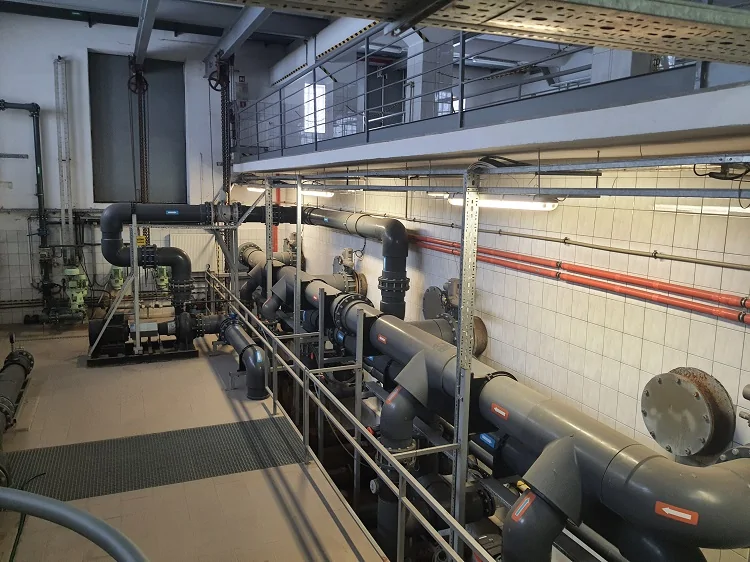
To meet the expectations of our customers and the issues they report, we have introduced pumping station control systems that combine reliability, unique functionality, and low implementation and operating costs. The experience we have gained and our collaboration with trusted suppliers have allowed us to comprehensively implement increasingly larger and more complex projects.
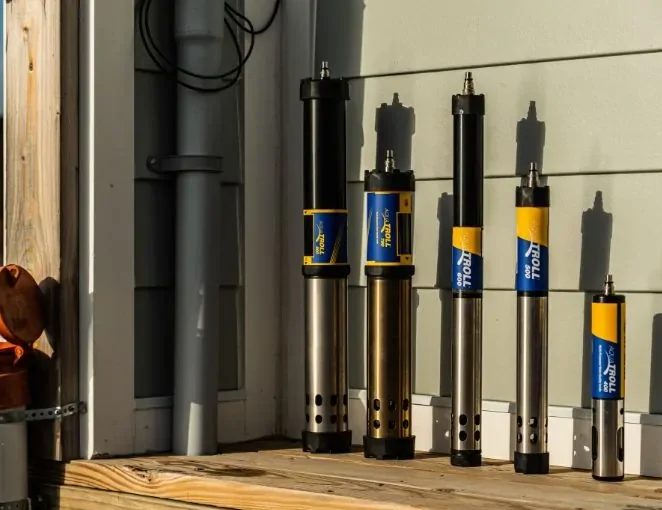
One example of such a project is the water intake system in Łańcut. The system we supplied was designed to uniformly draw groundwater from nine deep wells and deliver it to the main reservoir. The scope of delivery included a pump control system with inverter start-up, hydrostatic probes, pressure transducers, and electromagnetic flow meters. The control system's primary purpose was to ensure even use of the intake sources based on the level in a given well. Each well has a defined level range at which it is optimally operated. To measure the level, we used hydrostatic probes from the Swiss manufacturer STS, with individual parameters selected for each well. Both the cable length and the measurement range were individually selected for each measurement point. This allowed for maximum measurement accuracy of 0.2% of the measurement range, given the appropriate measurement range. During normal water drawdowns, water is drawn from each well in a rotational manner, down to a pre-determined minimum level.Thanks to the hydrostatic level measurement, we also obtain information about the dynamic water level. This allows us to smoothly regulate the pump speed via frequency inverters, protecting the well from excessive water consumption and erosion. In the event of sudden, excessive water consumption, the system manages the wells by adding another pump with the highest level above the minimum operating limit. Each connected pump/well operates with the dynamic water level in mind.

All intake points were also equipped with Flow38 electromagnetic flow meters from the Czech manufacturer Comac Cal. They are characterized by reliability, a measurement accuracy of 0.5%, and ease of use with a menu in Polish. Importantly, the supplied flow meters are MID certified for billing, as required by Polish Waters. A wide range of output signals allowed for seamless integration with the control system and cloud-based visualization. Access to the visualization, which was an integral part of the control system, allows the client to quickly access information on the status of the well pumps (operation/standby/failure), the level in a given well, the pressure in the pipelines, and the current flow. Data collected from the flow meters also provides information on total production at individual points. In addition to accessing this information, the visualization also allows remote switching of pumps on and off and the exclusion of individual intakes from automatic operation for purposes such as maintenance.
The delivered system has been operating flawlessly for many months, as evidenced by the opinion issued by Zbigniew Szylar, manager of the Łańcut Water Treatment Plant:
"The water drawn by the Łańcut Water Treatment Plant is very rich in iron, manganese, and other minerals. This caused the old mechanical measuring devices to become clogged, resulting in measurement errors and ultimately inoperability. To avoid this, these devices had to be regularly dismantled and cleaned, which was labor-intensive and disrupted the operation of the entire Water Treatment Plant. This situation led to the decision to improve the system and find a solution that would eliminate these problems.We addressed this issue with Poltraf, who proposed a solution based on an electromagnetic flowmeter coupled with an automatic control system using an inverter, pressure transducer, and hydrostatic probe. This system was tested on one well. After a quarter of testing, we observed a number of benefits. The primary problem, water meter clogging, was eliminated.Furthermore, we managed to standardize water usage in the well to protect it from erosion, reduce mechanical wear of the pumps, and reduce electricity consumption. Furthermore, employees gained work comfort because they no longer had to physically visit the well every other day to read its parameters – all this is handled by automation. Other features they gained include the ability to view the intake's operating parameters on a graphical chart, which is very intuitive and allows for quick detection and prevention of irregularities. All this can be archived and analyzed as needed. The resulting benefits allowed us to decide to modernize the Dąbrówka well complex and install the described devices on the remaining eight wells. We are planning further modernizations in the near future based on the implemented and proven system."
20.12.2023
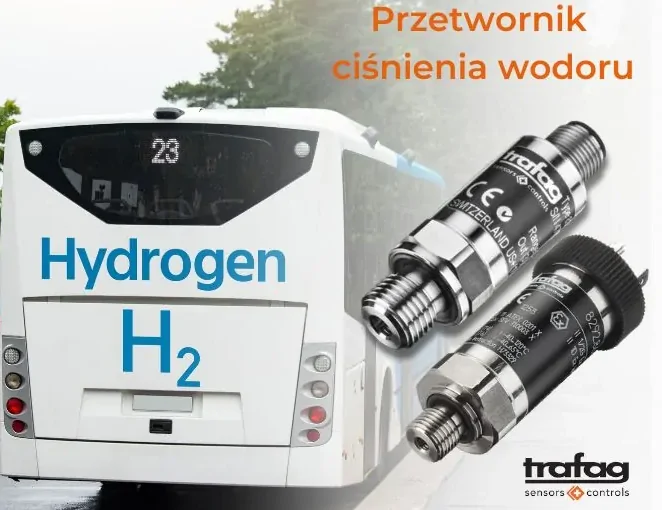
A pressure transmitter is a commonly used device that converts the pressure value into an appropriate output signal. The signal from the pressure transmitter is read and forwarded to the control system. In times of shrinking fossil fuel resources, looking for alternative energy sources is a necessity. Hence the increasing popularity of hydrogen, which is the most common element in the Universe and one of the most common elements on Earth. However, not every pressure transmitter can be used to work with hydrogen. Why is it like that? Which sensor technology in the pressure transmitter is best for this medium? We answer these questions below.

29.09.2023
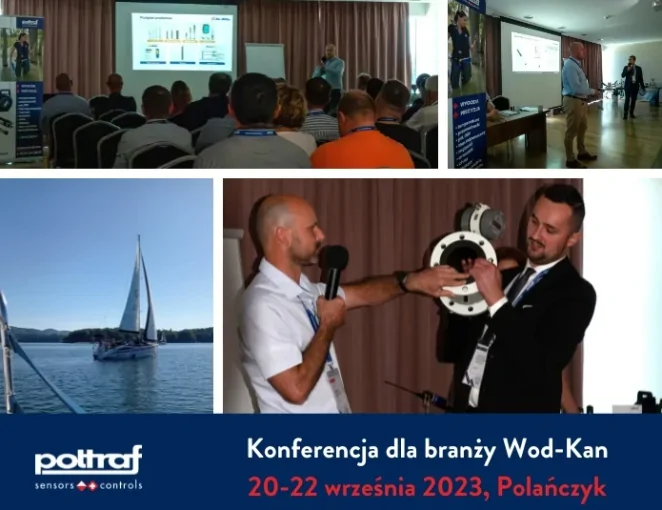
On September 20-22, a conference for the water and sewage industry was held in Polańczyk. This is another edition of the event dedicated to the industry, organized by Poltraf.
02.11.2023
We are a representative and distributor in Poland of the following brands:
since 1994
since 2004
since 1997
since 2010
since 2009

since 2016
since 2023
since 1994
since 1994
since 2001
od 2024 r.
 Unit Calculator